
Non-Surgical Preventative Hip Care for Children with Cerebral Palsy
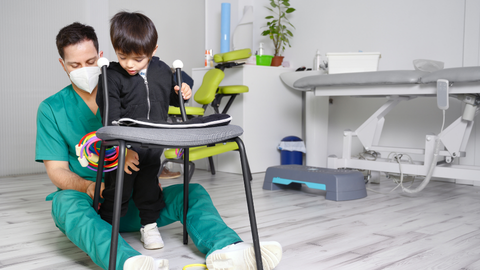
Non-Surgical Preventative Hip Care for Children with Cerebral Palsy
This course includes
The instructors
Overview
Hip displacement is a common and potentially debilitating complication for children with cerebral palsy (CP), affecting approximately 35% of this population. In this course, pediatric physical therapist Joanne Weltman provides a comprehensive overview of non-surgical, preventative hip care strategies designed to support early detection, clinical decision-making, and improved long-term outcomes.
The course explores the underlying causes of hip dysplasia and displacement in children with CP, emphasizing how abnormal muscle tone, spasticity, and musculoskeletal changes contribute to progressive hip instability. Participants will gain insight into key diagnostic tools such as Reimer’s migration percentage, as well as the role of the Gross Motor Function Classification System (GMFCS) in predicting risk and guiding surveillance protocols.
Joanne also reviews global hip surveillance guidelines, highlights limitations within current screening timelines, and discusses evidence-based, non-invasive strategies that may help reduce the need for invasive surgical interventions. By integrating research evidence with clinical experience, this course equips healthcare professionals with practical knowledge to support early, proactive care for children with CP.
Learning Objectives
By the end of this course, participants will be able to:
- Develop an understanding of the causes, risk factors, and incidence of hip dysplasia and displacement in children with cerebral palsy.
- Review current international hip surveillance guidelines and their clinical application.
- Understand the current available evidence on non-invasive preventative measures.
- Learn new and unique non-invasive preventative options.
- Expand knowledge of the scientific theory behind treatment choices based on clinical experience.
- Expand your resource and reference list on hip dysplasia and cerebral palsy
Audience
This course is designed for healthcare professionals involved in pediatric and neurological rehabilitation, including:
-
Physiotherapists and physical therapists
-
Occupational therapists
-
Pediatric rehabilitation specialists
-
Orthopedic and rehabilitation clinicians
-
Healthcare professionals working with children with cerebral palsy
Why This Course Matters
Hip displacement can significantly impact mobility, comfort, and overall quality of life for children with CP. Without early detection and appropriate management, progressive displacement may result in pain, loss of function, and the need for complex surgical intervention.
This course highlights the importance of early surveillance and preventative care, demonstrating how targeted screening and evidence-based clinical decision-making can improve outcomes. By understanding risk stratification through GMFCS classification and utilizing standardized diagnostic measures such as Reimer’s migration percentage, clinicians can better identify children at highest risk and implement timely interventions.
Additionally, the course addresses gaps in current surveillance recommendations, encouraging clinicians to critically evaluate screening timelines and advocate for earlier monitoring when appropriate. The multidisciplinary approach presented reinforces the role of collaborative care in optimizing long-term musculoskeletal health for children with CP.
What’s Included
-
45 minutes of video lessons featuring expert instruction and clinical insights
-
Lesson summaries and key insights provided after each video to reinforce learning and support knowledge retention
-
Comprehensive reference list to support evidence-based practice and further study
-
Downloadable PDF: Hip Care Guide to support clinical application and patient management
-
Certificate of completion to document your continuing education
Please note: Presentation slides are not included with this course.
The instructors

B.Sc.PT, MRSc, Co-Founder of DMI Therapy, Owner SMILE Therapy For Kids
Jo-Anne Weltman graduated from Wits University in Johannesburg, South Africa in 1991 with a B.S.c. in Physiotherapy. Since then she has completed her MRSc. with research in Hip Dysplasia in Cerebral Palsy at the University of British Columbia in Vancouver, Canada. She has taken numerous courses over the years including NDT, Conductive Education, Therapeutic Taping, Theratogs application, Therasuit Approach, TASES (NMES) and Spinal Stimulation, Vestibular-Ocular therapy, CVI, CME III, Reflex Integration, Sensory Integration, Orthopaedics in Children - to name a few.
Jo-Anne lives and works in Toronto, Canada. Her objective has always been to provide the best services to the children that she works with. so she opened S.M.I.L.E. Therapy for Kids a private practice that specializes in child development, to meet the demand for all areas of developmental and orthopaedic therapy in children. She continues to research and find the best treatments for all the children that are under her care and connects with specialists all over the world to achieve this.
Jo-Anne is an advocate for children with special needs and their families and works hard at trying to make changes in many areas to help these children as well as increasing their general level of care by educating those who will provide care to them. She is the CO-Founder or DMI Therapy, and teaches therapists all over the world.
Material included in this course
-
Introduction
-
Summary and Key Insights: Introduction
-
Literature Review
-
Video: Literature Review
-
Summary and Key Insights: Literature Review
-
Quiz: Literature Review
-
Feedback: Literature Review
-
Literature Review Summary
-
Video: Literature Review Summary
-
Summary and Key Insights: Literature Review Summary
-
Quiz: Literature Review Summary
-
Feedback: Literature Review Summary
-
Preventative Interventions
-
Video: Preventative Interventions
-
Summary and Key Insights: Preventative Interventions
-
Quiz: Preventative Interventions
-
Feedback: Preventative Interventions
-
Conclusion
-
Video: Conclusion
-
Summary and Key Insights: Conclusion
-
Hip Care Guide
-
PDF Download: Hip Care Guide
-
References and Course Evaluation
-
References
-
Course evaluation
Is a certificate of completion included with this course?
Once you have completed the course, a certificate of completion (including learning hours and course information) will be generated. You can download this certificate at any time. To learn more about course certificates on Embodia please visit this guide.
This can be used for continuing education credits, depending on your professional college or association. If this course has been approved for CEUs in specific jurisdictions, it will be noted on the course page and CEU information may be added to your course certificate. Please read this guide for more information.
Has this course been approved for CEUs (Continuing Education Units) for Physical Therapists and Physical Therapy Assistants in the US?
Yes, Embodia is a rule-approved CE provider of the PT Board of Florida (# 50-54793), a licensed CE sponsor of physical therapy continuing education by the Illinois Department of Financial & Professional Regulation (IDFPR #216.000415), an approved provider of continuing education by APTA Massachusetts, an approved provider of the Oklahoma Board of Medical Licensure & Supervision - Physical Therapy (#50-54793), and an approved provider of continuing education for Physical Therapists and Physical Therapist Assistants in California (CA) by CEUapproval.com, a recognized approval agency of the Physical Therapy Board of CA.
Courses approved by other state boards in the following jurisdictions are likely accepted for licensure credit based on the state regulation:
AL | AK | AR | CO | CT | DE | GA | HI | ID | IL | IN | IA | KS | KY | ME | MA | MI | MO | MT | NE | NH | NC | ND | OK | OR | PA | RI | SC | SD | UT | VT | VA | VI | WA | WI | WY
Please reach out to your state licensing board to confirm. If you have a specific question about CEU approval for this course in your state, please direct your inquiry to info@ceuapproval.com
The following states are not pre-approved: AZ, DC, LA, MD, MN, MS, NM, NV, NY, NJ, OH, TX, WV
Participants licensed in states not pre-approved may file for individual approval using the instructions on this document.
US PTs and PTAs: How many CEUs has this course been approved for?
This course has been approved for 1.25 CEUs (Continuing Education Units) for Physical Therapists and Physical Therapy Assistants in the US. Please see the FAQ 'Has this course been approved for CEUs (Continuing Education Units) for Physical Therapists and Physical Therapy Assistants in the US?' for a detailed list of the approved states. In order for your US jurisdiction information to appear on your course certificate, you must complete your jurisdiction information on your Embodia profile as per this guide.